AI-powered handheld imaging that delivers submillimeter 3D diagnostic scans — operable by any healthcare worker, anywhere in the world.
Patients wait weeks for MRI and CT appointments. Costs are prohibitive. Access requires specialist infrastructure that most of the world simply doesn't have.
Patients wait weeks or months for MRI and CT scans. Anxiety builds, disease progresses, and outcomes worsen while queues grow.
MRI costs £500–750 per scan. Machines cost £3M. Healthcare systems can't scale access fast enough to meet diagnostic demand.
Specialist radiographers, shielded rooms, fixed infrastructure. Not available in GP clinics, rural areas, or emergency zones.
A complete rethink of how diagnostic imaging works — from the hardware to the workflow to the output format.
Pairs with a standard smartphone. No trolleys, no fixed rooms. Pocket-sized and deployable in seconds anywhere a clinician goes.
Proprietary deep-learning algorithms reconstruct raw signals into high-fidelity 3D NIfTI volumes with submillimeter resolution in real time.
Guided acquisition workflows mean any trained HCA can perform a diagnostic scan. The AI handles image interpretation entirely.
Same-day diagnostic pathways, at the point of care.
No mains power, no shielded room, no capital infrastructure. GP clinics, rural posts, fertility centres, field hospitals.
Classified as non-medical device software under UK MDR 2002 — no MHRA device certification required, enabling immediate commercial deployment.
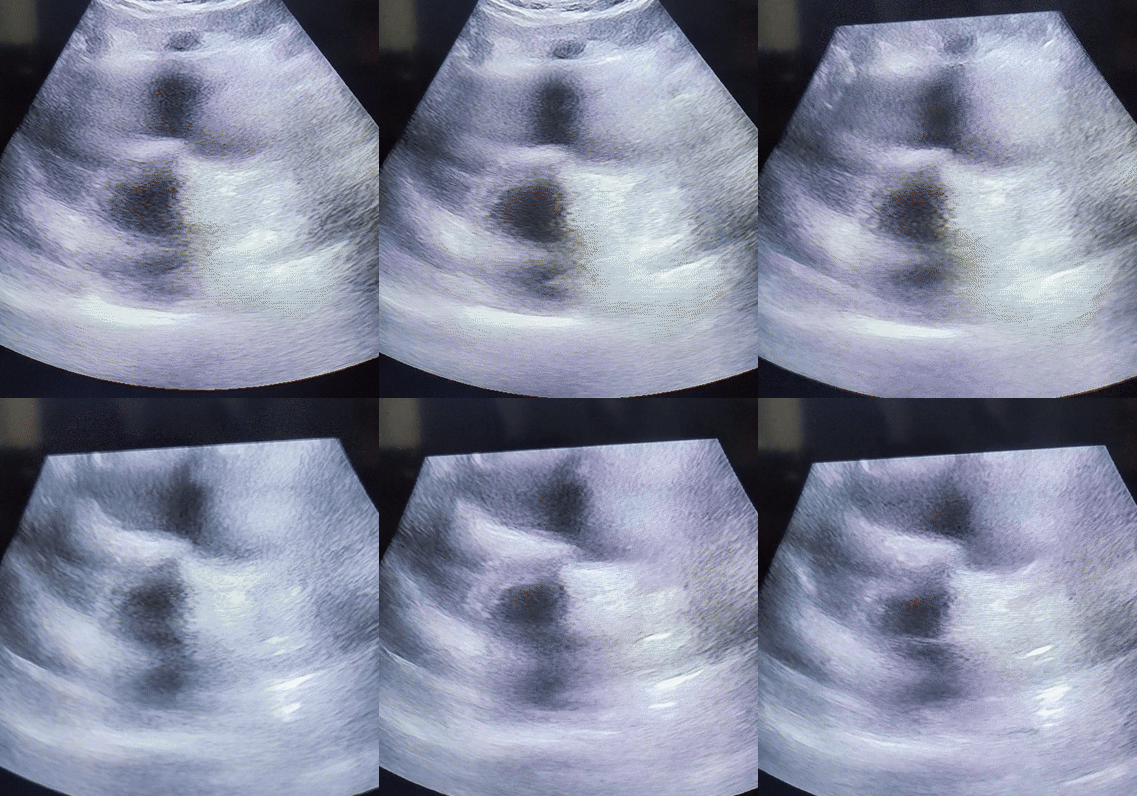
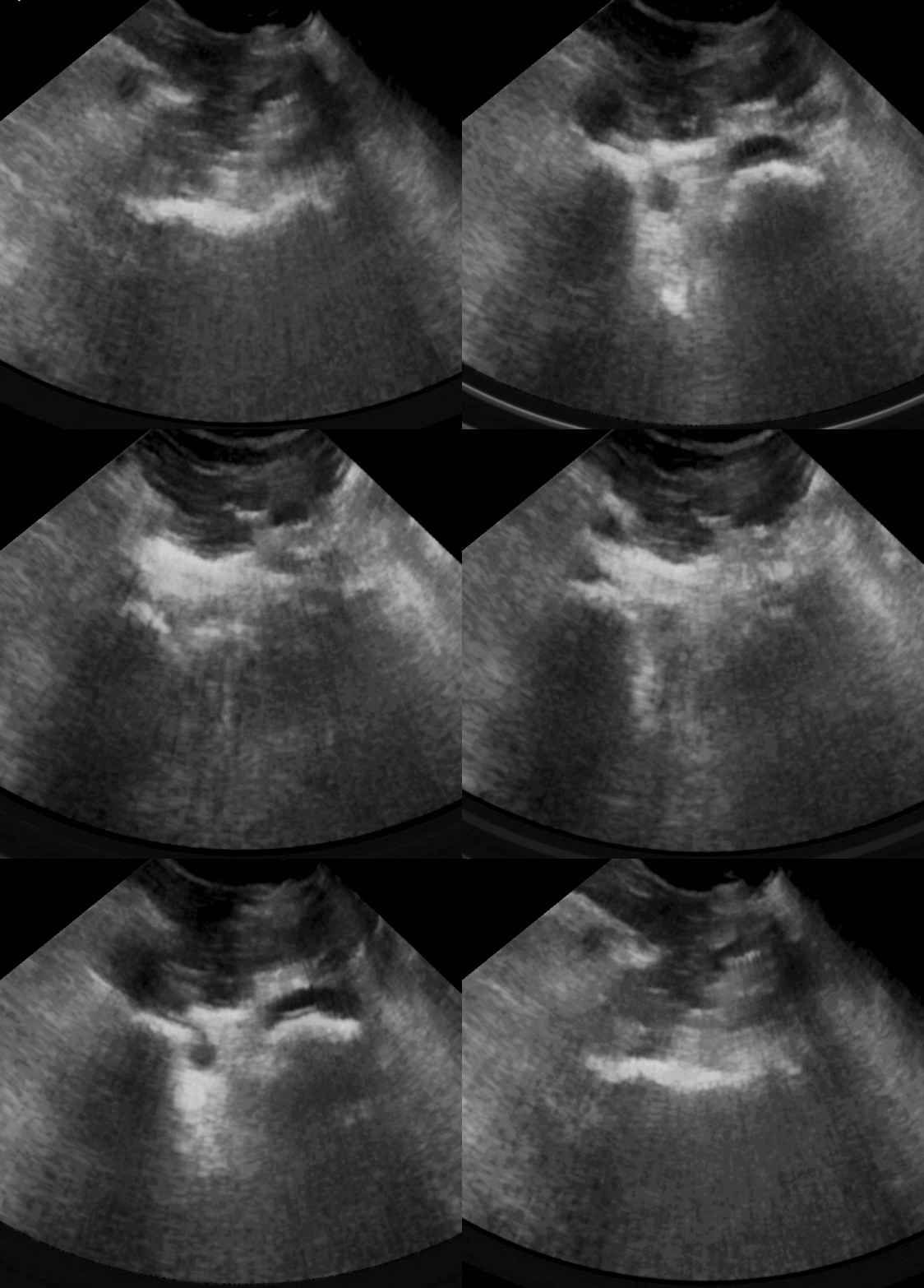
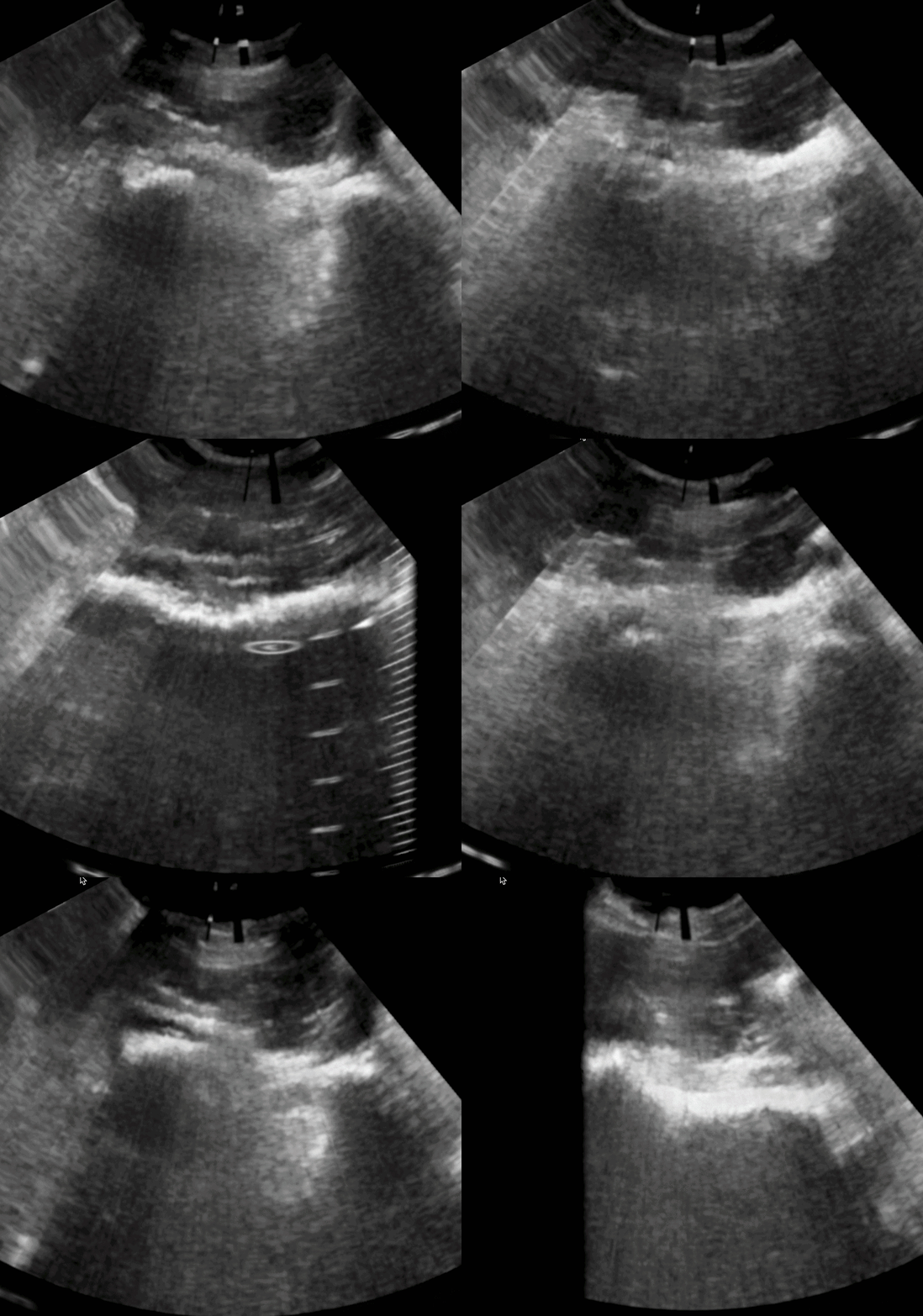
CUS reconstructs full volumetric data in real time. These are direct outputs from the system — a before/after musculoskeletal pair showing measurable structural change following physiotherapy.
Pre-physio
Baseline CUS scan showing soft-tissue and structural state of the knee joint prior to physiotherapy intervention showing posterior medial condyle effusion and lateral to the PCL effusion.
MSK module
Post-physio
Follow-up scan of the same patient after treatment, demonstrating measurable resolution of both effusions.
MSK moduleCUS uses a modular architecture — each clinical application is a discrete AI model trained on validated datasets. Three modules are commercially live today, with 20+ in active development.
● Live ○ In development
A simple four-step workflow designed to be operated by any trained healthcare assistant — no specialist expertise required.
Open the CUS app and select the relevant anatomical module. No configuration required — the AI handles the rest.
On-screen prompts guide probe placement. The AI tracks position in real time and confirms adequate anatomical coverage before proceeding.
Raw signals are processed through the CUS deep-learning engine, producing a full 3D NIfTI volume in under three minutes.
Images sent to PACS for clinical review and integration into the patient's medical record.
CUS reconstructs at submillimeter (under 1mm) voxel resolution — comparable to clinical MRI. The AI reconstruction engine uses proprietary deep-learning to compensate for the physical limitations of ultrasound, producing 3D volumetric data that has been validated in two independent clinical pilots against conventional imaging modalities.
No. CUS is designed to be operated by any trained Healthcare Assistant (HCA). The guided acquisition workflow walks the operator through probe placement step by step. In our clinical pilots, non-specialist operators successfully reproduced specialist-grade imaging outputs with minimal training.
CUS outputs standard NIfTI (.nii.gz) format — the same format used by MRI and CT systems. NIfTI files open natively in 3D Slicer, ITK-SNAP, FSLeyes, and most PACS systems. There is no proprietary lock-in and no new software required for radiologist review.
Under UK MDR 2002, CUS is classified as non-medical device software — no MHRA device registration is required, enabling immediate commercial deployment. Two independent third-party clinical pilots have confirmed diagnostic concordance with conventional imaging modalities. Three modules — KUB, Prostate, and TA Pelvis — are ready for commercial deployment today.
The core AI reconstruction algorithms are protected as trade secrets. The competitive advantage lives in the model weights and training methodology, not the hardware — making it extremely difficult to reverse engineer even if the probe hardware were replicated.
We're actively deploying across healthcare sites in the UK. Whether you want a demo, a partnership conversation, or have technical questions — we'd love to hear from you.
jason@carriertech.ukTell us about your setting and we'll arrange a live demonstration of the CUS system.